
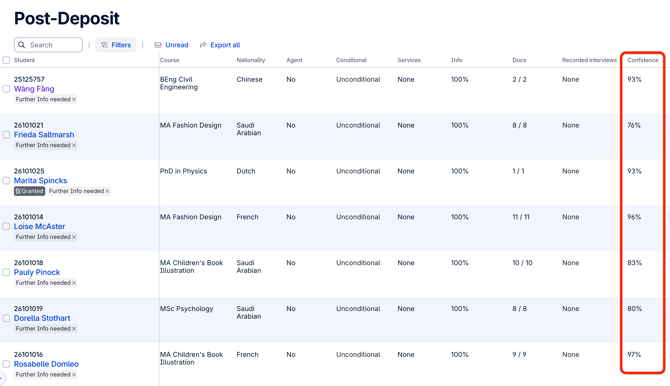
The Confidence Level score in CAS Shield provides universities with a quick, high-level indication of the relative strength of a student’s application. It is designed to highlight potential areas of concern and help admissions and compliance teams identify applicants who may require further review before a CAS is issued, E.g:
-
A higher score indicates a lower-risk profile.
-
A lower score highlights applications that may need closer attention.
The score is not a definitive decision-making tool but rather a guide to support institutional processes.
How is the score calculated?
The Confidence Level score is generated by a machine learning algorithm that takes into account over 150 data points provided by the student during their CAS Shield journey. This includes information such as previous study, visa history, dependents, and other key application details.
Key considerations include:
-
Demographic data: Applicant location, nationality, and other relevant background factors.
-
Historic visa outcomes: Previous UK visa refusals, border refusals, or incomplete courses can influence the score.
-
Application information: Course choice, funding, and preparedness indicators.
-
Other factors: Dependents, previous UK studies, prior travel history, and credibility concerns (via the pre-CAS questionnaire).
The score is designed to reflect the overall health of the student’s application.
How should universities use the score?
-
Identify risk areas early: Applications with lower scores may require additional checks or communication with the student.
-
Prioritise review processes: Allows compliance and admissions teams to focus resources effectively.
-
Support visa success: Helps ensure applicants meet UKVI requirements before CAS issuance.
We recommend paying special attention to applications with a score below 80%, but the score should always be used as a guide, not as a sole decision-making metric.